



The hidden driver behind thyroid nodules that most lab panels completely miss

 (NaturalHealth365) Thyroid nodules affect an estimated one in two adults by age 60. Most people are told the nodule is benign and to return for another exam in a year. What almost nobody is told is that a correctable nutritional deficiency may be quietly driving nodule formation in the first place.
Now, a major analysis published in Frontiers in Endocrinology is bringing that connection into sharp focus.
Researchers pooled data from 25 studies involving 54,621 participants, documenting 13,569 thyroid nodule events. People with low iodine levels had a 31.5% higher likelihood of developing thyroid nodules. Moreover, the relationship cut in both directions: excessive iodine intake above 300 micrograms per liter independently raised the risk of subclinical hypothyroidism.
Both ends of the iodine spectrum cause distinct thyroid problems, and Western medicine screens for neither.
Why the thyroid gland is more sensitive to iodine than most people realize
Iodine is the only nutrient the thyroid gland cannot function without. Every thyroid hormone molecule contains iodine as a structural component.
Without sufficient iodine, the gland cannot produce adequate hormones and compensates by enlarging tissue. Over time, that process promotes nodule formation. In fact, the entire process can occur silently for years before any symptoms appear.
However, the standard blood test for thyroid function measures TSH, T3, and T4, and none of those markers directly measures iodine status. A person can have technically normal hormone levels while still experiencing marginal iodine deficiency, which places steady pressure on thyroid tissue.
That pressure accumulates over the years. Furthermore, the thyroid has no alarm signal for early iodine stress that shows up on a routine blood draw.
Why so many people are now iodine deficient without any awareness of the problem
There are two significant shifts that have quietly caused an iodine deficiency in millions of people.
First, public health messaging about sodium reduction has led many health-conscious people to cut back on salt significantly. Second, there’s been an increase in exposure to halogens in our environment such as, fluoride and bromide – which chemically complete with iodine uptake.
Simply put, drinking contaminated water with fluoride or eating too many processed baked goods loaded with bromide tend to block the absorption of iodine.
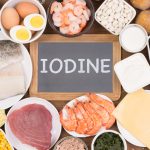
Eating organic, raw dairy, wild-caught fish, and sea vegetables like wakame remain the most consistent food sources of iodine.
What an overlooked mineral is quietly doing to thyroid tissue
The body requires iodine within a specific, relatively narrow range. Below that range, the thyroid gland strains to produce hormones, and the risk of nodules rises. Above that range, the gland can shift into a state of suppressed function.
More importantly, the optimal zone is not particularly wide, and dietary patterns that deviate in either direction have distinct consequences.
Currently, the National Institutes of Health recommends 150 micrograms of iodine daily for adults. Pregnant and breastfeeding women need significantly more. However, surveys consistently show that a significant portion of women of reproductive age in the United States fall below adequate intake.
For pregnant women, the stakes are particularly high, as iodine deficiency affects fetal brain development in ways that are not reversible.
Steps that protect thyroid function through targeted iodine support
Add iodine-rich whole foods to the daily diet as a foundational strategy. Wild-caught cod and kelp are iodine-dense foods available. In addition, small amounts of organic dairy products from pasture-raised cows can contribute to your daily iodine intake.
Request a urinary iodine test at the next medical appointment. Urinary iodine concentration testing is the most direct and accurate measure of iodine status available. A result below 100 micrograms per liter in adults indicates a deficiency that warrants attention. For those who are deficient, focus on making dietary changes outlined in this article.
Support the full nutritional environment the thyroid depends on, not iodine alone. Iodine requires selenium for proper thyroid hormone synthesis, and selenium deficiency significantly amplifies the consequences of low iodine status. Specifically, Brazil nuts, wild-caught fish, and pasture-raised eggs supply selenium in bioavailable form.
Zinc and iron also play essential roles in thyroid enzyme function. Together, these nutrients create the complete nutritional foundation the thyroid depends on to function without strain.
The test that most people will never be offered
Overall, 54,000 adults across 25 studies confirm that iodine deficiency raises the risk of thyroid nodules by nearly a third. Yet iodine testing remains absent from routine primary care. Patients discover nodules on incidental imaging, receive reassurance that the finding is benign, and leave with no discussion of the root cause.
Jonathan Landsman’s Thyroid and Adrenal Health Docu-Class addresses the nutritional, environmental, and lifestyle factors that drive thyroid dysfunction at the root level. For anyone managing a thyroid nodule or unexplained thyroid symptoms, this is the conversation that Western medicine is not having.
Click here to own the Thyroid and Adrenal Health Docu-Class.
Sources for this article include:
RELATED NEWS

Unspoken solution for cataracts, macular degeneration and diabetic neuropathy
(NaturalHealth365) An estimated 43.3 million people worldwide are completely blind. Shockingly, another … Unspoken solution for cataracts, macular degeneration and diabetic neuropathy
Elevated blood pressure can be triggered by poor dental health
(NaturalHealth365) Nearly half of American adults over 30 have some form of … Elevated blood pressure can be triggered by poor dental health
Fatty liver disease “treatment” advice to avoid for better health results
(NaturalHealth365) Liver cancer killed an estimated 484,000 people worldwide in 2021, a … Fatty liver disease “treatment” advice to avoid for better health results
How your inflammation risk is connected to eating bell peppers
(NaturalHealth365) Bell peppers rarely get the same attention as oranges when people … How your inflammation risk is connected to eating bell peppers