



New research confirms what millions of thyroid patients are never told about selenium

 (NaturalHealth365) Millions of Americans have been told the same thing after a Hashimoto’s diagnosis. Take your medication, get your levels checked every few months, and learn to live with the fatigue, the brain fog, the weight that won’t budge. What they’re almost never told is that a specific nutrient plays a direct role in thyroid health. One that most doctors never check and most patients never hear about.
A 2025 meta-analysis published in Medicine looked at what selenium actually does for Hashimoto’s patients. Researchers reviewed multiple randomized controlled trials. The results were clear. Six months of consistent selenium use brought significant drops in thyroid antibodies. Those are key markers of thyroid health that most doctors never bring up in a standard appointment. Three months wasn’t enough, but six months moved the needle in a meaningful way.
Hashimoto’s is really a whole-body problem – most doctors only treat the thyroid
Here’s what a lot of thyroid patients don’t realize: Hashimoto’s isn’t simply a thyroid problem. The thyroid is showing the symptoms, but the root causes run much deeper, through gut health, nutrient deficiencies, inflammation, and hormonal imbalances that standard care rarely addresses.
Most treatment focuses on replacing the hormones that the struggling thyroid can no longer make on its own. That helps with symptoms, but it doesn’t address why the thyroid started struggling in the first place.
The thyroid gland holds more selenium than any other organ in the body. That’s not a coincidence. Selenium plays a direct role in producing thyroid hormones and in protecting the gland from ongoing damage. When selenium levels drop, that protection disappears, and thyroid function gets worse.
What researchers found when they finally tested selenium in thyroid patients
Researchers from Tongji Hospital in Wuhan analyzed data from multiple randomized controlled trials testing selenium supplementation in people with Hashimoto’s thyroiditis. The pattern was consistent: three months of supplementation didn’t produce significant changes in antibody levels, but six months did. Both types of thyroid antibodies – the two key markers of thyroid health – dropped significantly.
A separate 2025 review confirmed that selenium doesn’t work alone. Zinc, iodine, iron, vitamin A, and vitamin B12 all play supporting roles in thyroid hormone production. Deficiencies in any of these – extremely common in people eating a standard American diet – quietly push thyroid function in the wrong direction.
One detail stands out from this broader research. People with Hashimoto’s who also have low vitamin B12 tend to have worse thyroid outcomes. Checking B12 is not part of routine thyroid care in most medical offices, which means many patients are walking around with a gap nobody has identified.
Simple steps to support your thyroid starting today
Most of these nutrients are available through food, and for selenium, the research points to a clear path for people who need more support.
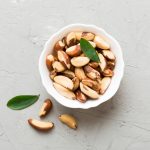
Start with selenium-rich foods: Two Brazil nuts a day are enough to meet most adults’ daily selenium needs. Wild-caught fish, such as sardines and tuna, also deliver solid amounts. These are easy additions to a regular weekly rotation without any complicated changes.
Consider a selenium supplement if you have Hashimoto’s: Research points to 200 mcg per day of selenomethionine as the most effective form, far better absorbed than other forms. Going above 400 mcg daily can cause real problems, so this is not a case where more helps.
Fill in the other nutritional gaps: Zinc from pumpkin seeds, 100% grass fed beef, and oysters helps the body convert thyroid hormones into their active form. Vitamin B12 from 100% grass fed animal products or a quality supplement addresses a deficiency that’s common in thyroid patients and routinely missed. Iron deficiency, especially in women, directly impairs thyroid hormone production and is worth getting checked for.
Remove what’s working against the thyroid: Gluten has a documented relationship with autoimmune thyroid disease, and many Hashimoto’s patients report real improvement after cutting it out. Ultra-processed foods and refined vegetable oils keep inflammation running high, which worsens autoimmune conditions. Fluoride, chlorine, and bromine – common in tap water and toxic household products – can interfere with how the body uses iodine, something the thyroid depends on completely.
Pay attention to gut health: Research increasingly shows that what happens in the gut shapes immune system behavior. Fermented foods like sauerkraut, kimchi, and plain kefir feed beneficial bacteria. Cutting back on refined grains and sugar gives the gut a chance to recover and do its job properly.
What your thyroid doctor probably hasn’t brought up
Standard thyroid care focuses almost entirely on hormone levels and medication adjustments. What gets left out is the bigger picture. Why does thyroid function break down in the first place? And what would it actually take to support the gland beyond a daily prescription?
Jonathan Landsman’s Thyroid and Adrenal Health Docu-Class brings together leading experts to fill in those gaps.
Discover which nutrients matter most for thyroid recovery, why adrenal health and thyroid health are deeply connected, and how to read thyroid labs that most doctors overlook. Find out the dietary and lifestyle changes that make the biggest real-world difference for people living with Hashimoto’s and other thyroid conditions.
RELATED NEWS

Unexpected way to lower heart attack risk takes less than 20 minutes a day
(NaturalHealth365) Most heart health advice sounds exhausting: hour-long workouts, strict diets, and … Unexpected way to lower heart attack risk takes less than 20 minutes a day
Overlooked eating mistake linked to fatty liver disease and cirrhosis
(NaturalHealth365) What time did you eat your last bite yesterday? For millions, … Overlooked eating mistake linked to fatty liver disease and cirrhosis
Research reveals how to stop cavities, tooth decay and gum disease naturally
(NaturalHealth365) You brush twice a day, floss most nights, and never miss … Research reveals how to stop cavities, tooth decay and gum disease naturally
Reduce lung cancer risk by 41 percent by eating six key nutrients
(NaturalHealth365) Forty-one percent. In a study of hundreds of thousands of adults, … Reduce lung cancer risk by 41 percent by eating six key nutrients